
Learning Center
Recruiting Starts Here
Find the right place to keep competing and keep learning. Not the most famous program. The right one.
That means most of what families hear is out of date, borrowed from another sport, or wrong. Programs are being added every year, the scholarship rules are not what people assume, and the deadlines that decide eligibility arrive earlier than anyone expects.
Preview the full module catalog
Create a free account to enroll and track your progress.
We spent two hours with the coaches of a D1 women's flag football program and asked one question: what do you actually want to see?
Two coaches. No support staff. They do every part of recruiting themselves, and they called it investigative work. Hours spent to find one piece of information about one athlete.
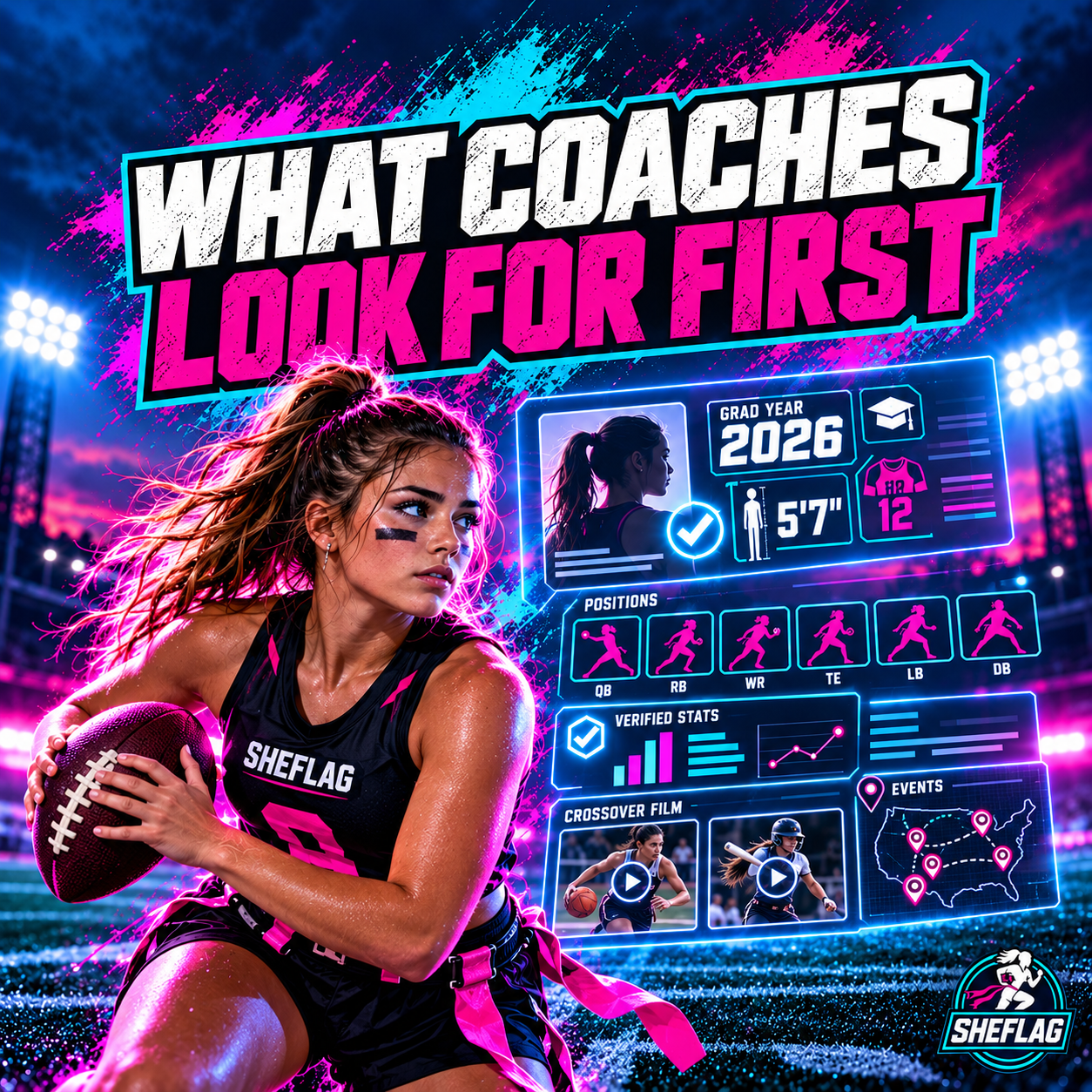
What they want is simple. Film, and knowing exactly who you are. Name, grad year, jersey number, position, height. And they recruit in Instagram DMs.
Every module in this step does their digging for them. Do them in order. Most take a few minutes.
Modules in this step
 Locked
Recruiting 101: Getting Started
What college flag football recruiting actually looks like, and the five things to do first.
 Locked
What Coaches Look For First
Five details decide whether a coach can find you, and film decides whether she keeps watching.
 Locked
Your Intro Video
Record it right in SheFlag so coaches meet you before they watch a play.
 Locked
Game Film
Three minutes of your best plays, your high school game film, and you easy to spot in every clip.
 Locked
Mark Yourself in Your Film
Show coaches which player is you, so they spend their time evaluating instead of hunting.
 Locked
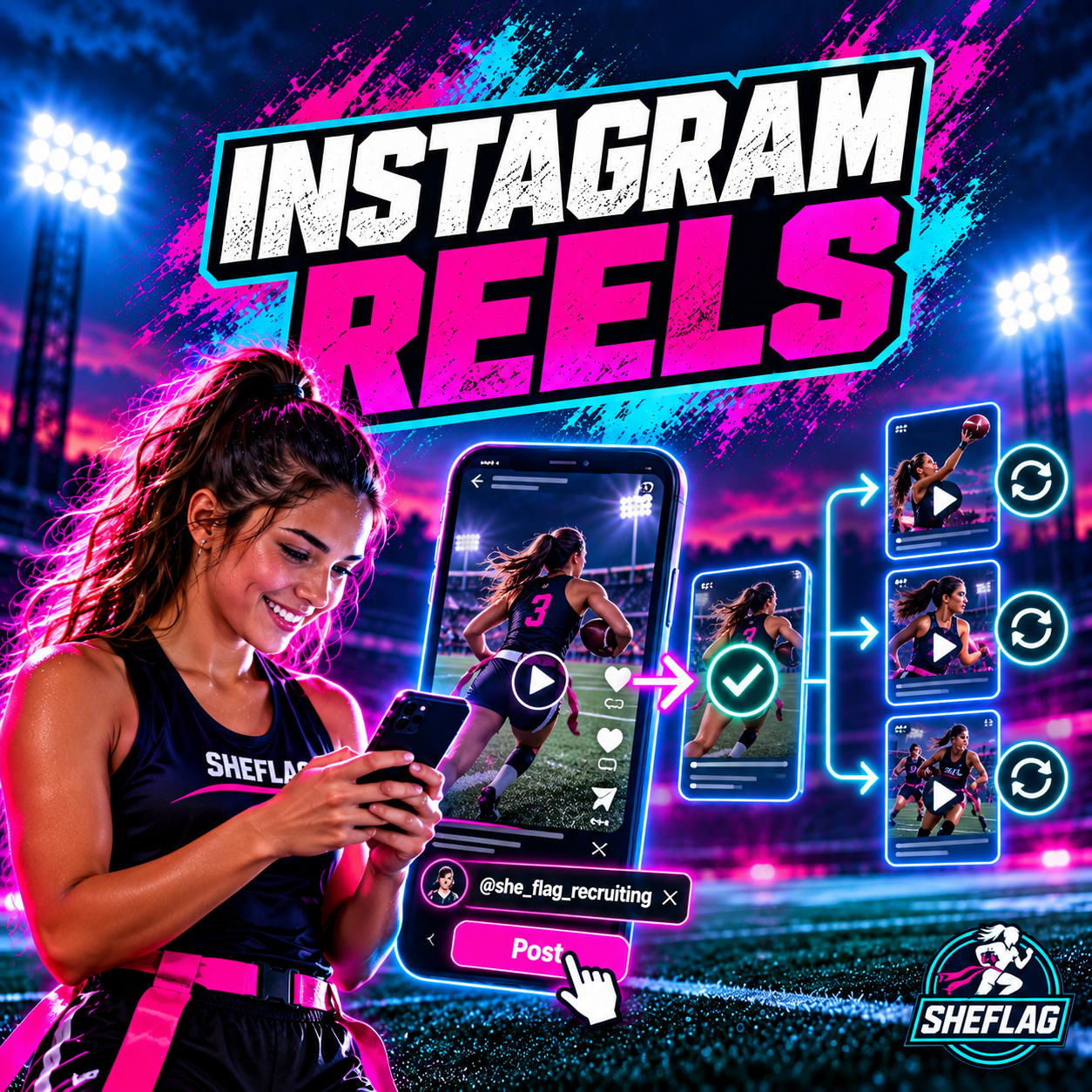
Instagram
Coaches recruit in Instagram DMs, so make your account easy to find, easy to trust, and on your profile.
 Locked
Import What You Already Have
Already have a profile or film somewhere else? Paste the link and bring it over.
College flag football is brand new, and it is growing fast. Most of what families hear is borrowed from other sports, out of date, or wrong.
This step gives you the real picture: what the NCAA, NAIA and junior colleges are, how divisions differ, and how 5v5 and 7v7 are played at each level.
In this step
- How college sports are organized, and where flag fits
- 5v5 vs 7v7, and which one college coaches recruit for
- The rules of each format
- The academic standards for each division
You do not need to memorize it. Read it once so the rest of the recruiting process makes sense.
Modules in this step
 Locked
The Landscape
Most families start recruiting with a wrong mental model of what "college sports" means.
 Locked
5v5 vs 7v7
High school and college play 7v7, the Olympics and most youth leagues play 5v5, and you need to know both.
 Locked
7v7 Rules: High School and College
The basics of the game coaches will recruit you to play.
 Locked
5v5 Rules: Olympic, International and Youth
The basics of the faster, smaller game played at the Olympics and in most youth and club leagues.
 Locked
Division Standards
The academic standards for every college level, and how to check where you stand.
The right school is not the most famous one. It is the one where you will play, get a degree you want, and be happy if you stop playing.
In this step
- AI College Finder: get matched to flag programs that fit your academics and what you want in a school
- College Tracker: keep every college you like in one list and track where you stand
- Choosing the right school: the questions to ask coaches, admissions and current players
- Eligibility: registering with the Eligibility Center, academic standards, and amateurism rules
Start with the AI College Finder, then save the colleges you like to your list.
Modules in this step
 Locked
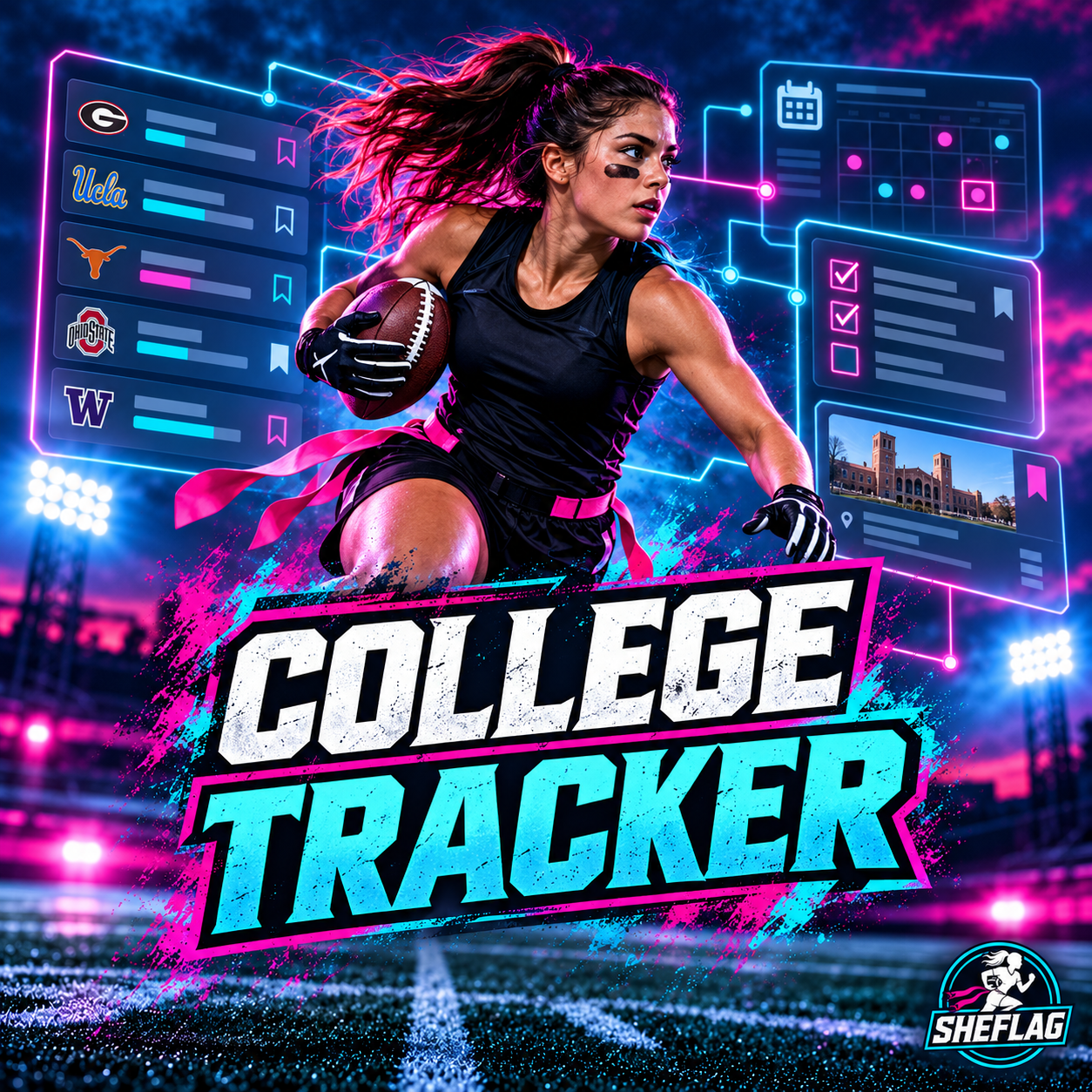
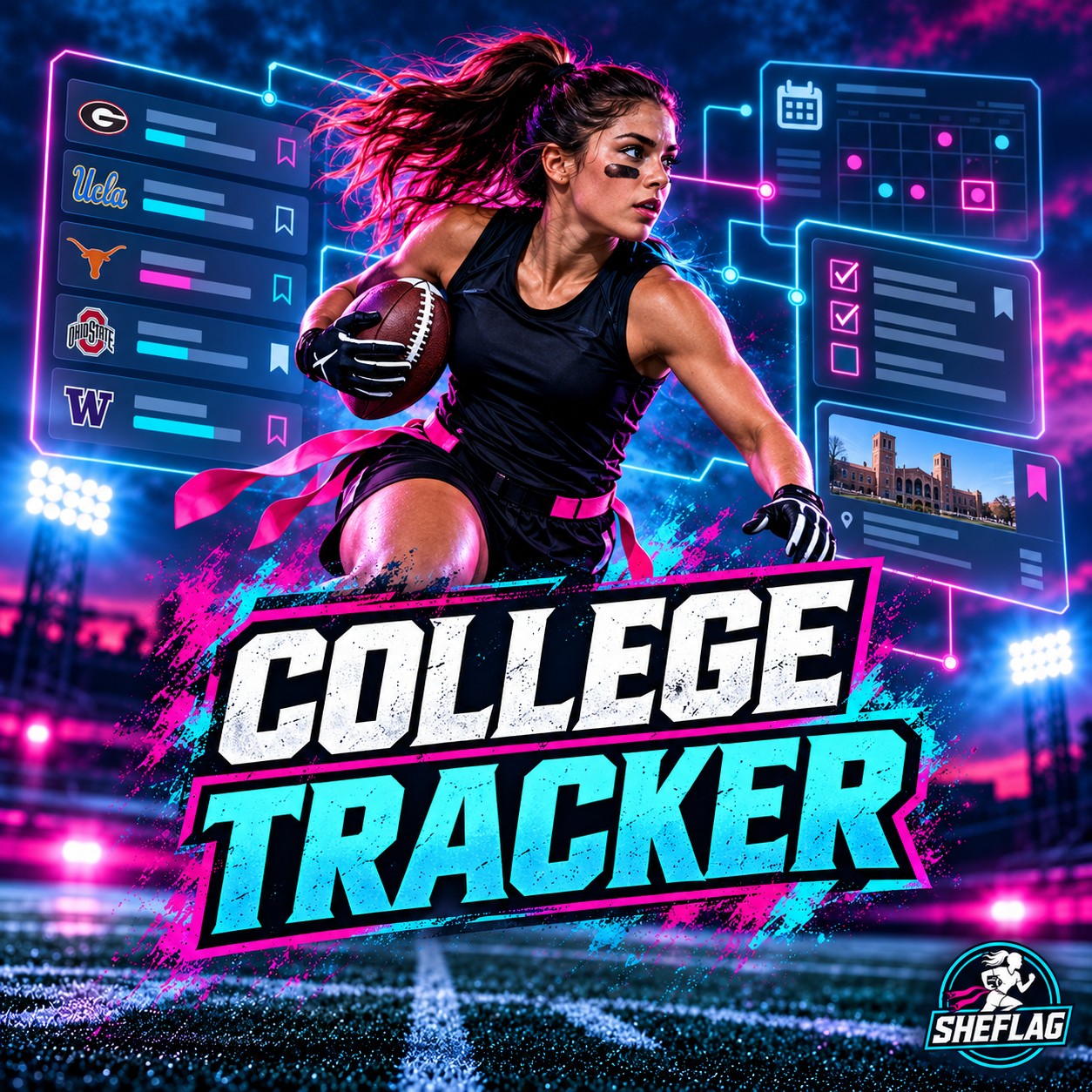
College Tracker
One list for every college you are interested in, with where you stand with each one.
 Locked
Registration & the Eligibility Center
Which Eligibility Center account you need, what it costs, and how to keep it on track.
 Locked
Amateurism & Athletics Eligibility
The rules on money, pro teams, agents and your eligibility window, including what changed in 2026.
 Locked
Choosing the Right School
Getting in, the questions to ask, and how to compare your options.
 Locked
Academic Eligibility Foundations
What counts as a core course, how your core GPA is figured, and how to protect your record.
 Locked
AI College Finder
Answer a few questions and get matched to college flag programs that fit you.
Coaches cannot recruit you if they do not know you exist. Most of the time, you have to reach out first.
The coaches we talked to have no support staff. A short, clear message with your grad year, position, jersey number and a link to your SheFlag profile makes their job easy.
In this step
- Finding the right coach to contact
- What to put in your first email
- How often to follow up
- What it actually means to be recruited
Coaches told us Instagram DMs are how they reach players. Check your message requests, and reply.
Modules in this step
 Locked
Coach Outreach That Gets Replies
Who to email, what to say, when to follow up, and how to handle replies.
 Locked
Getting Recruited: Building the Case
How to get recruited: signals, your level, your target list, events and the parent's role.
Money is the biggest source of confusion in recruiting. Most athletic scholarships are partial, many athletes do not get one, and the money that pays for college often comes from somewhere else.
In this step
- What a scholarship can and cannot cover
- How each division handles athletic aid
- The FAFSA and why every athlete should file it
- NIL rules
- How to read and compare offers
File the FAFSA every year, even if you think you will not qualify for aid.
Modules in this step
 Locked
Money: Scholarships, Aid & NIL
What scholarships really cover, how aid and NIL work, and how to compare offers.
Flag football does not have one season. High school seasons change state to state, college plays in the spring, and club runs all year.
Colleges also have rules about when coaches can contact you, visit you, and make offers.
In this step
- High school, college and club seasons
- Recruiting periods and what coaches can do in each
- Official and unofficial visits
- First contact dates
Save the dates that matter to you in your Recruiting Timeline.
Modules in this step
 Locked
Flag Football Seasons
High school seasons change state to state, college plays in the spring, and club runs all year.
 Locked
Recruiting Rules & Calendars
When coaches can contact you, how visits work, and what to watch for on campus.
Standard recruiting advice does not always fit homeschooled or international athletes. There are more documents, different deadlines, and rules that are easy to miss.
In this step
- What the Eligibility Center needs from homeschooled athletes
- Documents and timelines for international athletes
- Life as an international student-athlete in the U.S., from visas to housing to health care
If this is you, start this step early. The paperwork takes time.
Modules in this step
 Locked
Special Populations
What's different for international, homeschooled, disability and junior college athletes.
 Locked
The International Student-Athlete Experience
Staying in status, working, travel, health, money and life after college for international athletes.
Getting recruited is the start. These modules cover what comes after.
In this step
- A real week as a college athlete, and staying eligible
- Transferring, and life after your sport
- Sports betting rules, and how to protect your eligibility
Read these before you commit, so you know what you are signing up for.
Modules in this step
 Locked
Life as a Student-Athlete
Your week, staying eligible, health and the people on campus who can help.
 Locked
Transfers & What Comes After
Transferring, the portal, going pro, and finishing your degree.
 Locked
Sports Betting and Competition Integrity
The betting rules, what they cost you, and where to get help.